
The title is a provocation, but only half of one. Data centers will not disappear. What is ending is the assumption that intelligence must live inside them. The semiconductor industry is now shipping a generation of chips whose explicit purpose is to run AI where the data is born — in the camera, the vehicle, the machine tool, the meter — instead of shipping raw data to a hyperscale facility and back. For anyone managing a Scope 3 inventory, this is not an IT story. It is a structural change in where the emissions of your digital value chain will sit, and who will be able to measure them.
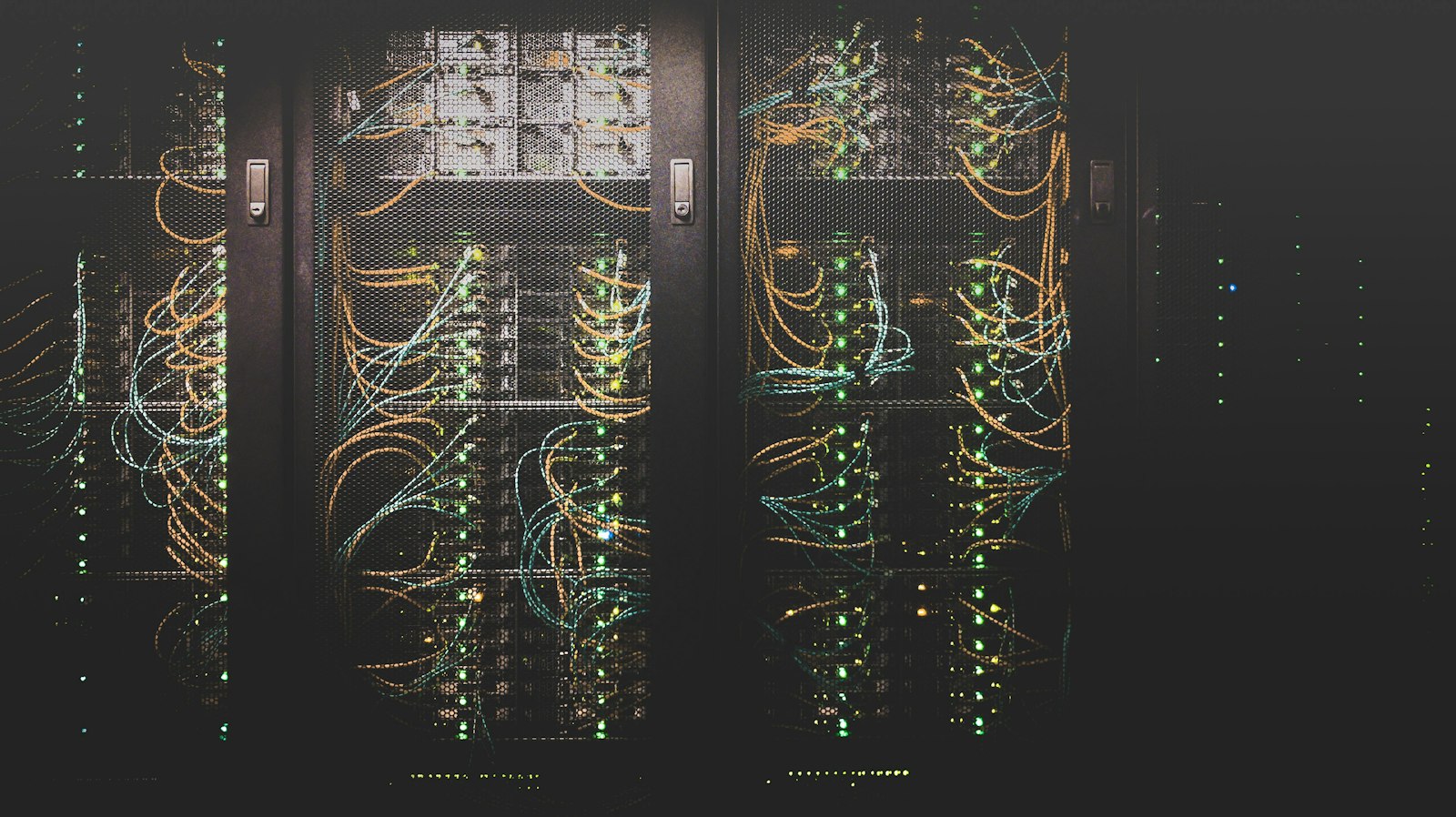
Start with the bill we already pay. Data centers and data transmission networks together account for roughly 1 to 1.5% of global electricity use, and the IEA projects data center electricity demand to roughly double by 2030 under the pressure of AI workloads. Every large language model query, every video stream sent to the cloud for analysis, every raw sensor feed uploaded for processing carries an energy cost in a facility you do not own, on a grid you do not choose. In carbon accounting terms, most of that cost lands in your Scope 3 — category 1 for the IT equipment and services you buy, category 11 for the energy your products consume when your customers use them.
Three eras of AI architecture, three carbon profiles
The first era is cloud AI: GPUs in massive data centers, raw data streamed in, answers streamed out. It is powerful and it is expensive in every dimension — bandwidth, latency, privacy exposure, and energy. A video-surveillance architecture that ships high-definition footage 24/7 to a cloud facility is paying for transmission and remote compute continuously, whether or not anything interesting is happening in front of the camera.
The second era is edge AI: a system-on-chip inside the device runs inference locally. The camera no longer sends footage; it sends conclusions — a metadata event, a short clip when something actually happens. Architectures of this type routinely cut bandwidth by more than 90%, keep raw data on site (a privacy and compliance benefit in itself), and remove the round-trip latency. The energy comparison is equally stark: local inference on a purpose-built chip consumes a fraction of the energy of transmitting the data and running the same model remotely.
The third era is already visible on roadmaps: TinyML and ubiquitous AI. Digital signal processors, neural processing units and microcontrollers running machine learning at sub-milliwatt power, on battery, with no network connection at all. Always-on anomaly detection, sound recognition, gesture tracking — inside devices that never touch a server. At that point the data center is not even in the loop.
“The paradigm is shifting from sending pixels to the cloud to understanding pixels at the edge. For a carbon accountant, that sentence reads: emissions move from someone else's Scope 2 into your product's design choices.”
The LLM is leaving the cloud too — for the desktop, the laptop and the server room
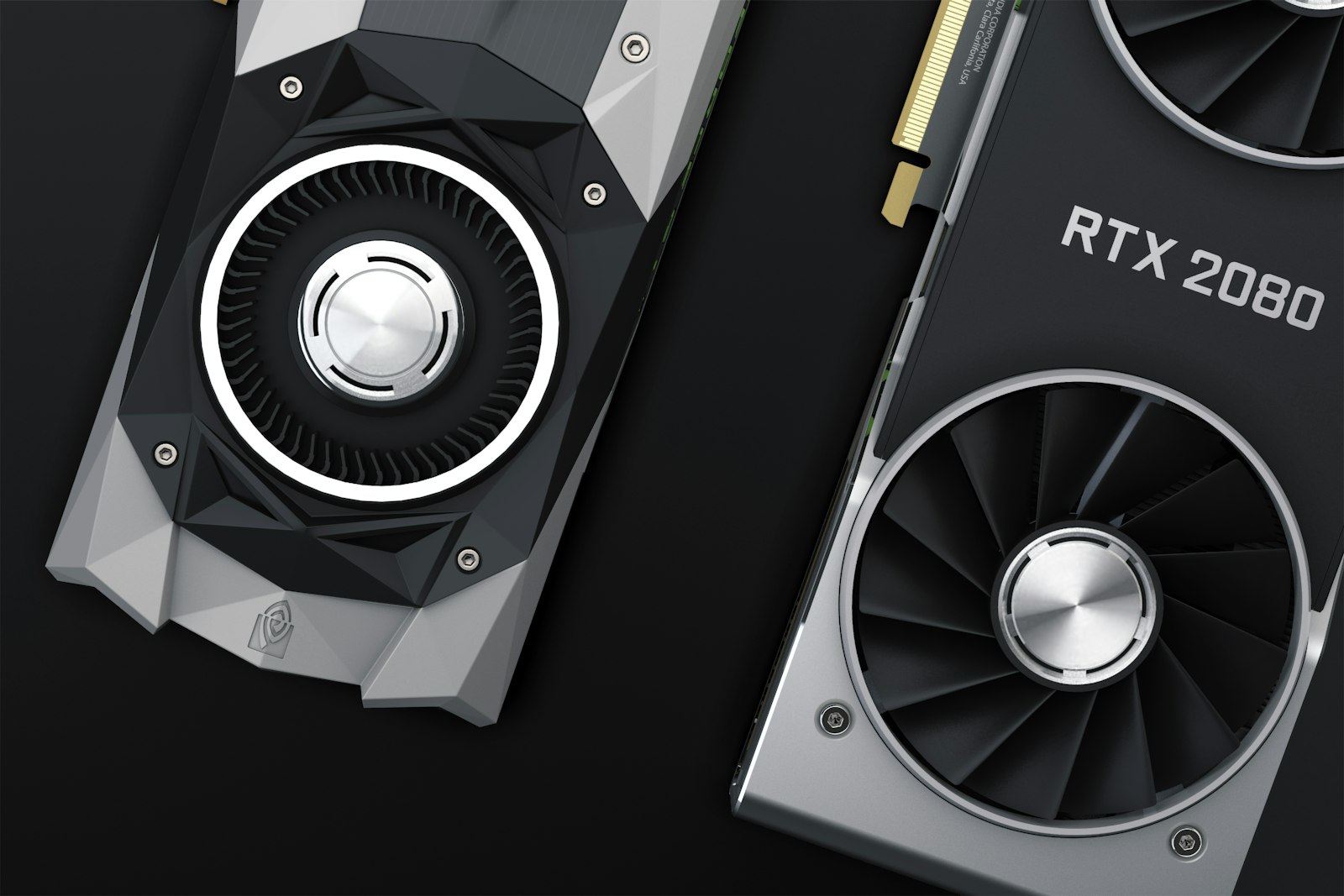
This shift is not only about sensors and cameras. The same physics is pulling large language models out of the cloud. A desktop workstation with a recent NVIDIA RTX GPU now runs a serious open-weight model locally. Apple's M-series chips, with unified memory shared between CPU and GPU, turn a Mac Studio — or even a MacBook — into a credible inference machine. And mini-PCs such as GMKtec's boxes built on AMD Ryzen AI processors put a neural processing unit on a desk for the price of a smartphone. What required a data center rack three years ago now fits under a monitor.
Look at who benefits. A law firm runs document analysis on a desktop in its own office: client files never leave the building, and the confidentiality argument writes itself. A freelancer carries a laptop that drafts, translates and summarizes on battery, in a train, offline. A large enterprise deploys its own server cluster and stops paying per-token rent for its most routine workloads. In each case the energy bill moves from a hyperscaler's grid to a machine the buyer owns, controls — and can actually measure.


The market has already voted
Market analyses converge on the same shape: the edge AI market, roughly $26 billion in 2026, is projected to approach $245 billion by 2040 — a compound annual growth rate above 17%. Hardware dominates revenue today; software is the fastest-growing segment; edge devices — smartphones, IoT, drones, industrial sensors — drive adoption. The drivers named by analysts are exactly the ones a sustainability lead should recognize: lower latency, lower bandwidth cost, privacy and compliance pressure, and the maturing of 5G, IoT and AI chip technology.
Geography matters here. North America currently holds the largest market share, but Asia-Pacific is the fastest-growing region — and it is where the chips, the devices and the factories that integrate them are actually made. If your supply chain touches electronics, and almost every supply chain now does, this transition is happening inside your supplier base, whether or not it appears in your questionnaire.
What this rewrites in your Scope 3
Category 1 — purchased goods and services. The embodied carbon of IT hardware does not shrink because inference moves to the edge; it shifts. Fewer servers and less network equipment upstream, more sophisticated chips inside more devices downstream. A buyer who only tracks data center services will watch one line improve while the semiconductor line quietly grows. The question to ask electronics suppliers is no longer just which renewable electricity powers their assembly plant, but which foundry, which node, which packaging — the chip itself is becoming the carbon hotspot of the product.
Category 11 — use of sold products. This is where edge AI is genuinely good news. A device that processes locally instead of streaming to the cloud can cut its lifetime use-phase energy dramatically — both its own consumption and its share of network and data center load. For manufacturers of connected products, edge architecture is becoming one of the few levers that reduces category 11 by design rather than by grid decarbonisation you do not control.
There is a trap, though. Use-phase savings calculated with average grid factors and assumed usage patterns are modelled reductions, not measured ones. If your product claims a lower footprint because it computes at the edge, the claim is only as strong as the usage data behind it — which, conveniently, an edge device can actually collect.
How the market tools treat this — and where the gap is
Most sustainability platforms were built for a world where digital emissions meant buying renewable electricity for servers and reporting cloud usage. They are catching up, but the edge transition exposes a structural limitation: they measure what is reported to them, not what is designed into products.
| Tool | What it does well on digital emissions | Where the edge-AI shift exposes a gap |
|---|---|---|
| EcoVadis | Supplier questionnaires and ratings, including IT procurement policies. | Self-declared answers; cannot see whether a supplier's product architecture actually reduces use-phase energy. |
| CDP | Standardized disclosure on energy and emissions, including data centers. | Annual, aggregated, company-level; blind to product-level design choices like edge inference. |
| Watershed / Persefoni / Sweep | Carbon accounting engines with cloud-usage modules and spend-based factors. | Modelled estimates from spend and averages; a chip-level efficiency gain disappears inside an emission factor. |
| Normative | Automated calculation from accounting data. | Same limitation: the ledger does not know where inference happens. |
| SGS / TÜV SÜD | Verification and assurance of reported figures. | Verifies what was declared; does not re-engineer the product or the supplier program. |
| BE-CAUSE (Net Zero Pulse + SSDP) | Ranks the supplier ecosystem on real transition levers, then deploys ESG coherence on the shop floor — including product architecture and energy questions with the suppliers who design the devices. | Not a disclosure tool; it is the execution layer that turns a digital-emissions finding into a supplier conversation and a design decision. |
This is the pattern we see across every Scope 3 category: the market is well equipped to count, and poorly equipped to change. Net Zero Pulse exists to pilot the supplier ecosystem at portfolio level — to identify which suppliers' technology choices actually move your trajectory. The Strategic Suppliers Development Program then does the unglamorous work on the ground: sitting with a supplier's engineering team, reading the product's energy profile, and closing the gap between what your report declares and what the shipped product does. At a cost below the administrative time a questionnaire-only approach already consumes.
What to do on Monday morning
- Add one question to your electronics and connected-product supplier reviews: where does the intelligence in your product run — cloud, edge, or on-device — and what does that choice do to lifetime energy?
- Split your digital Scope 3 into at least three lines: cloud services, network, and embodied hardware. A single IT line will hide the shift for years.
- Treat use-phase claims from suppliers as hypotheses until they come with usage data. Edge devices can provide it; ask for it.
- Watch Asia-Pacific suppliers specifically: the edge transition is being designed and manufactured there first. The companies that understand it earliest will set the specifications your next product generation inherits.
Data centers will keep growing for training the largest models — that workload is not moving. But the inference layer, the part that touches every connected product you buy or sell, is leaving the building. The companies that update their carbon accounting architecture as fast as the chip industry updates its own will be the ones whose Scope 3 reports still describe reality in 2030.