


If you are a Chief Procurement Officer (CPO) or a Sustainability Director relying on your Chinese suppliers to hit your corporate Net Zero targets, you are currently navigating a fascinating paradox.
On one hand, the sheer volume of corporate climate data coming out of China is exploding at an unprecedented rate—a genuinely positive surprise for global supply chains. On the other hand, the underlying math of that data might be systematically underestimating your true carbon footprint by millions of tons.
This is the reality of Scope 3 emissions accounting in China. As new regulations force unprecedented transparency, the calculation methodologies remain a minefield of inaccuracies.
In this comprehensive analysis by be-cause.earth, we explore the positive acceleration of Chinese climate disclosure, the regulatory tsunami driving it, and the critical data flaws that could derail your global compliance with frameworks like the EU Corporate Sustainability Reporting Directive (CSRD) and the Carbon Border Adjustment Mechanism (CBAM).
1. The Positive Surprise: The IPE CATI Benchmark 2024/2025
For years, the assumption in Western procurement circles was that Chinese suppliers were a "black box" for climate data. The latest data proves this assumption wrong.
Within China, the Institute of Public and Environmental Affairs (IPE) has been tracking the corporate climate transition through its Corporate Climate Action Transparency Index (CATI). The 2024/2025 CATI data reveals a significant and highly encouraging acceleration in supply chain transparency.
According to the latest evaluation covering 1,950 companies across 36 industries, attention to Scope 3 and supply chain greenhouse gas (GHG) disclosure is rising rapidly. We can be both surprised and satisfied to see that 51% of evaluated companies are now disclosing Scope 3 emissions, and 77% of those companies specifically include supply chain emissions in their reporting.
Furthermore, 35 major global brands—including Apple, Cisco, Dell, Foxconn, and Luxshare-ICT—are now actively driving over 2,836 suppliers to disclose their carbon data through the Blue Map website. This represents a massive 27.5% year-on-year increase in supplier engagement.
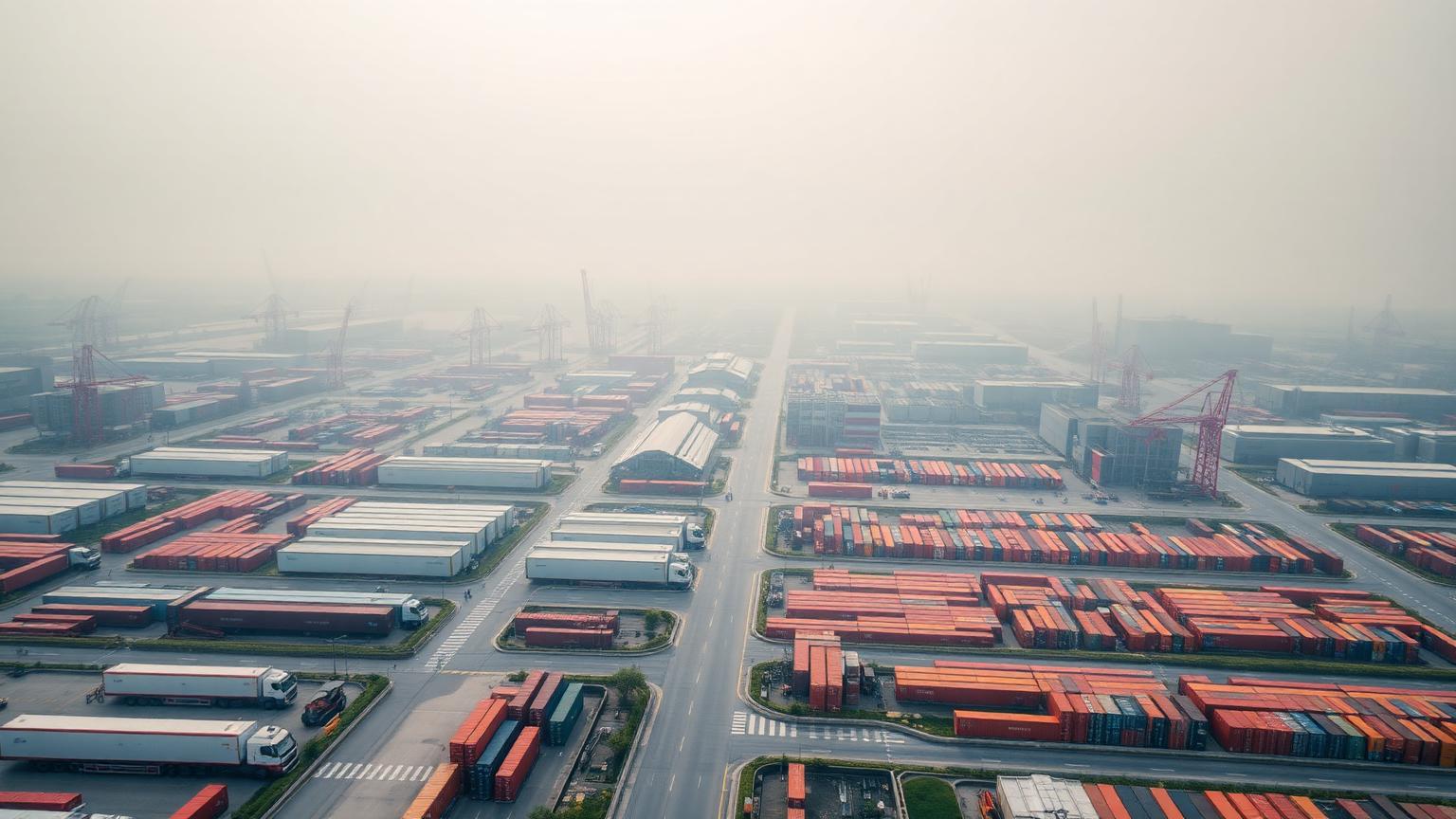
The momentum is real. However, a broader look at the Chinese manufacturing market reveals that while the top performers are accelerating, nearly 80% of major listed Chinese firms are still not disclosing any Scope 3 emissions. The leaders are moving fast, but the long tail of the supply chain is lagging.
2. The Regulatory Tsunami: Order 834 and the New Disclosure Standard
This landscape is about to change violently due to two major regulatory shifts in Beijing that directly impact global supply chain compliance.
China's National Climate Disclosure Standard (January 2026)
In January 2026, China finalized its first national climate disclosure standard. Crucially, this standard is broadly aligned with the International Sustainability Standards Board (ISSB) and incorporates the double materiality principle found in the EU's CSRD.
The standard mandates the disclosure of Scope 1, Scope 2, and Scope 3 emissions, tying corporate reporting directly to China's national decarbonization targets. As Bao Qiong from Greenpeace East Asia noted, this direct mirroring of EU standards is "a major milestone for Chinese enterprises integrated into global value chains," as it forces them to track the exact impact data required by European laws.
State Council Order No. 834 (April 2026)
While the disclosure standard pushes for transparency, State Council Order No. 834—effective April 2026—creates a massive compliance risk for foreign buyers trying to verify that transparency.
Order 834 is China's first dedicated administrative regulation on industrial and supply chain security. Article 13 strictly prohibits any organization from conducting supply-chain-related investigations or information-collection activities in China that violate PRC laws.
For global procurement teams, this means that routine ESG due diligence, supply-chain mapping, and on-site supplier audits tied to foreign regimes (like the EU Corporate Sustainability Due Diligence Directive, or CSDDD) now carry significant legal risk if not executed with extreme caution. You are legally required by Europe to map your Chinese supply chain, but legally restricted by China on how you can collect that data.
“Are you struggling to collect compliant supplier data in China without violating Order 834? Book a 15-minute diagnosis with be-cause.earth to see how our AI-powered platform navigates this regulatory conflict.”
3. The Math Problem: Why Your Scope 3 Data is Probably Wrong
Even when Chinese suppliers willingly provide Scope 3 data, the accuracy of that data is highly questionable. The root of the problem lies in the methodologies and the emission factors used.
The Spend-Based Calculation: A Necessary First Step, But a Long-Term Trap
Most Chinese firms currently disclosing Scope 3 emissions rely heavily on the spend-based method—calculating emissions based on the financial value of purchased goods multiplied by an industry-average emission factor.
To be fair, this is a completely legitimate and necessary first step. Platforms like Greenly and others use spend-based calculations to give companies a quick, clear, and high-level view of their Scope 3 priorities. It allows operational teams to identify hotspots without getting bogged down in impossible data collection from day one.
However, as a long-term compliance strategy, it becomes a trap. As highlighted by Dialogue Earth, most Chinese firms do not disclose which methodology they apply, nor the emission factors or data sources used. This creates a serious lack of reliability and comparability. When a supplier switches from a cheap, highly polluting material to a slightly more expensive, low-carbon alternative, the spend-based method will paradoxically show an increase in their carbon footprint because their financial spend went up. To truly decarbonize, companies must eventually transition from spend-based estimates to operational, activity-based calculations.
The Electricity Emission Factor: China's Clean Energy Push vs. Western Databases
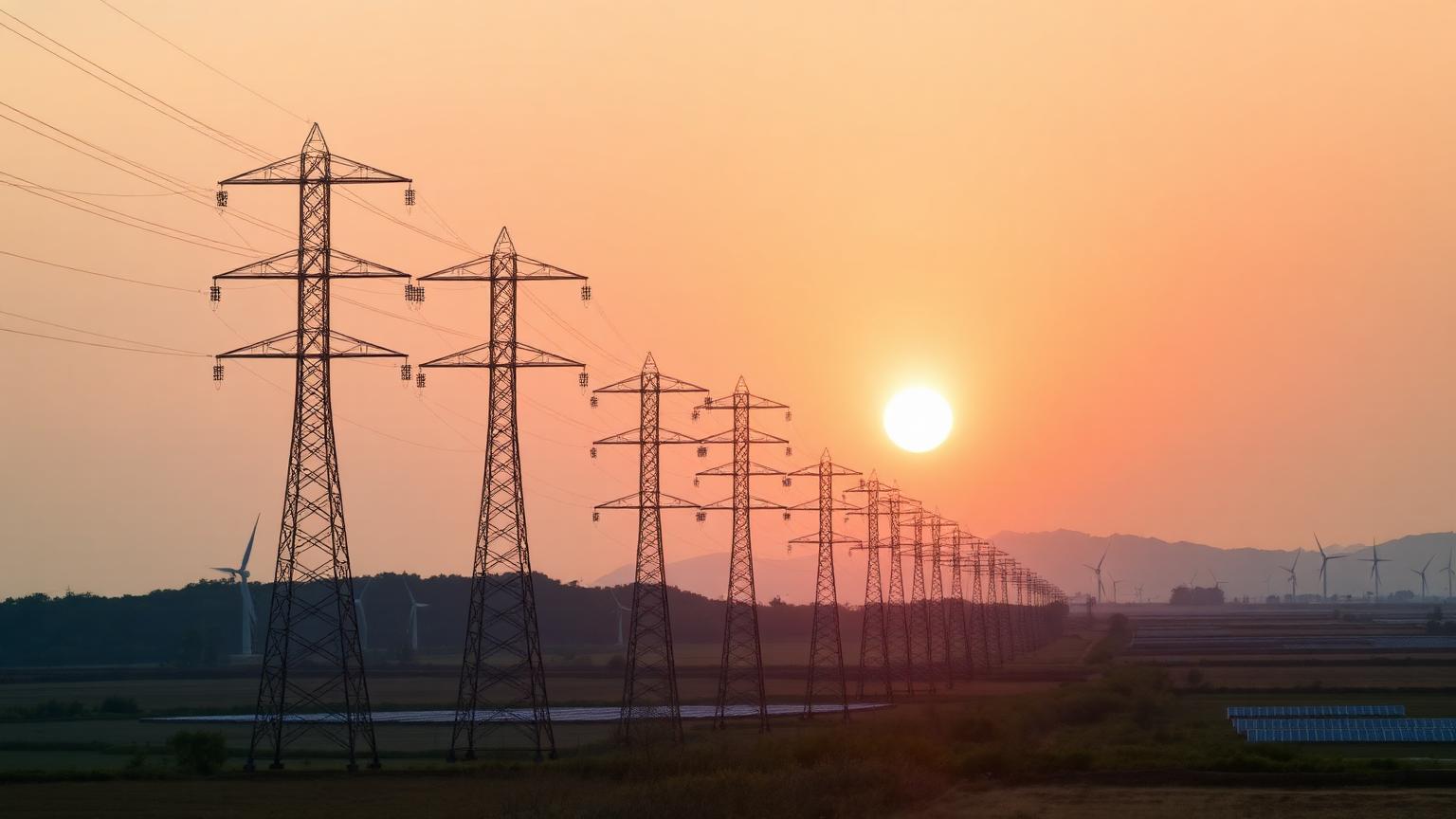
The most complex debate lies in Scope 2 calculations (which become your Scope 3 emissions).
For years, Western databases have applied high-carbon emission factors to Chinese manufacturing. However, China has worked aggressively to decarbonize its grid, and the world has often kept using old tools to measure a new reality. When you deep-dive into specific regions, you find incredibly clean energy. For example, hydropower-rich provinces like Sichuan and Yunnan maintain grid carbon footprint factors that are more than 70% below the national average.
To avoid being under the data sovereignty of Western countries and their outdated databases, China is actively building its own infrastructure. In late 2025, the Ministry of Ecology and Environment (MEE) unveiled a roadmap to build a preliminary National Product Carbon Footprint Factor Database by 2027, aiming for a comprehensive, internationally influential database by 2030.
But until that database is fully operational and globally accepted, discrepancies remain massive. A comparative study published in Energies in January 2025 revealed a significant gap in the Average CO₂ Emission Factor of Electricity (AEF) for China. Looking at the baseline year of 2021, the official factor reported by China's MEE was 0.5568 kg CO₂/kWh. However, for that exact same year, the International Energy Agency (IEA) calculated the true factor to be 0.6093 kg CO₂/kWh.
This 9.43% discrepancy stems from different treatments of coal fuel parameters and Combined Heat and Power (CHP) plant allocations. If your Chinese supplier uses the official MEE factor, their reported emissions are systematically underestimated by nearly 10% according to Western standards. For a factory consuming 100 GWh annually, that is roughly 5,250 tonnes of CO₂e hidden from your corporate ledger.
4. The be-cause Alert: Traceability is Survival
The convergence of strict EU regulations (CBAM, CSRD, CSDDD), aggressive Chinese disclosure mandates, and the clash between Western and Chinese emission databases creates a perfect storm for global supply chains.
Relying on static spreadsheets, spend-based estimates, and unverified supplier self-reporting is no longer just inaccurate—it is a material financial and legal risk.
To survive this transition, procurement leaders must move away from average data and demand Primary Activity Data. This requires dynamic Life Cycle Assessments (LCA) that calculate emissions based on actual physical quantities (kilograms of steel, kilowatt-hours of regional electricity) rather than financial spend.
In a multipolar regulatory world where data collection is heavily scrutinized, deploying AI-driven traceability platforms is the only viable way to securely map your supply chain, verify primary data, and defend your Net Zero claims against both European auditors and Chinese regulators.
Ready to secure your supply chain data? Explore the be-cause.earth Supplier Truth Engine and transform your ESG compliance from a liability into a competitive advantage.
Questions fréquentes
Références
- Institute of Public and Environmental Affairs (IPE). (2025). 2025 Green Supply Chain CITI Evaluation Report: Executive Summary.
- Institute of Public and Environmental Affairs (IPE). (2024). 2024 Supply Chain CATI Index Report.
- Dialogue Earth. (2025). How China's listed firms can accelerate emission disclosures.
- Climate and Capital Media. (2026). China's "very ambitious" new emissions reporting rules.
- Graf von Westphalen (GvW). (2026). State Council Order No. 834: China's New Regulation on Industrial and Supply Chain Security.
- Wu, Y., Zhang, Z., & Zhang, L. (2025). Decarbonizing China's grid: provincial grid carbon footprint factors and export-embedded electricity emissions from 2020 to 2060. Carbon Footprints, 4, 31.
- SESEC. (2025). China Unveils Roadmap for National Product Carbon Footprint Factor Database.
- Chen, F., Lei, J., Liu, Z., & Xiong, X. (2025). A Comparative Study on the Average CO2 Emission Factors of Electricity of China. Energies, 18(3), 654.